

“In the economic sphere an act, a habit, an institution, a law produces not only one effect, but a series of effects. Of these effects, the first alone is immediate; it appears simultaneously with its cause; it is seen. The other effects emerge only subsequently; they are not seen.”
Frédéric Bastiat
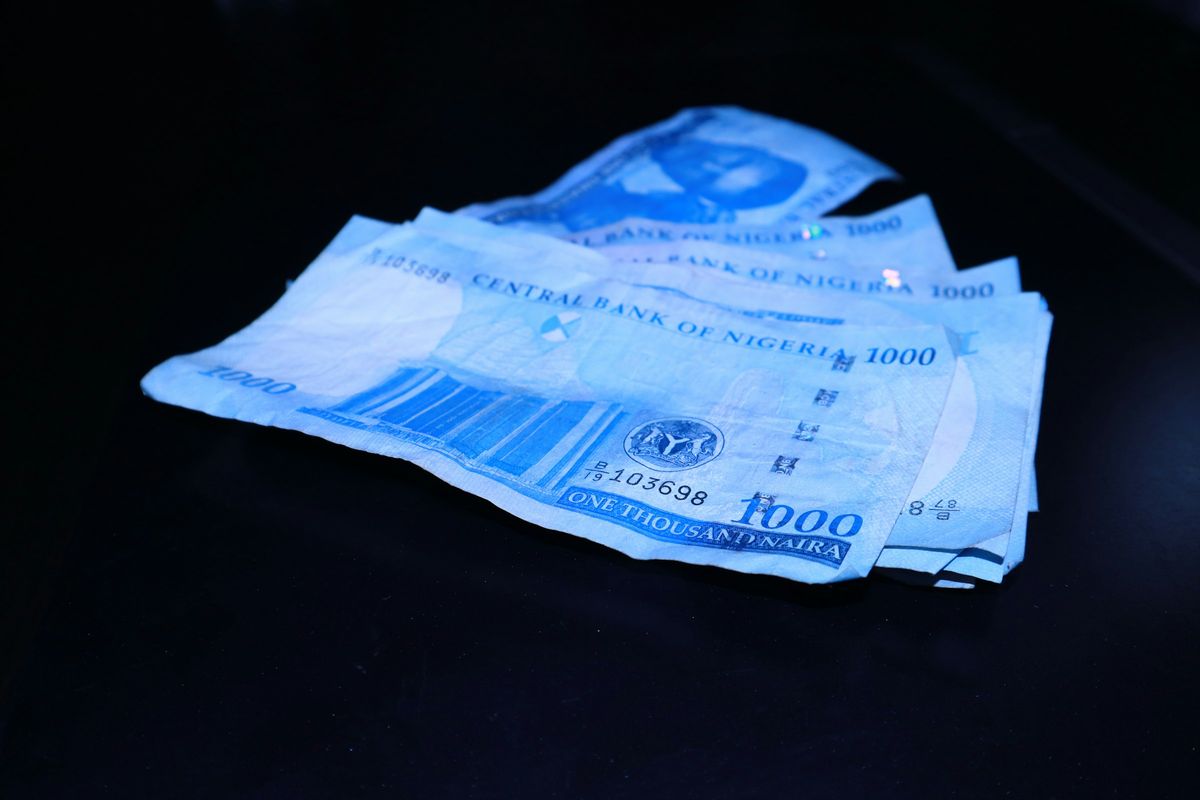
That assertion, made by the French economist in That Which Is Seen, and That Which Is Not Seen (1850), is better understood when we imagine a country that loses ₦1 billion through a fraudulent public contract. The immediate loss appears straightforward: ₦1 billion has been diverted from its intended purpose. But the real economic cost may be considerably greater.
What if that money was meant to construct a road connecting farmers to commercial markets? What if it was intended to equip a hospital, provide classrooms or expand electricity infrastructure?
The country has not merely lost ₦1 billion. It has potentially lost the agricultural output that a functional road could have facilitated, the lives that a properly equipped hospital could have saved, the human capital that better schools could have developed and the businesses that reliable electricity could have supported.
In economics, this is the idea of opportunity cost: the value of the next-best alternative forgone when a choice is made.
Viewed through this lens, the cost of corruption in Nigeria extends far beyond the money stolen. It includes the economic opportunities that never materialise, the productive capacity that remains undeveloped and the prosperity that an entire generation may never experience.
Beyond the money stolen
Corruption is commonly understood as the abuse of entrusted power for private gain. Its manifestations range from bribery and embezzlement to contract inflation, nepotism, procurement manipulation and the diversion of public resources. Although these practices differ in form, they share an important economic consequence: they distort the allocation of resources.
In a country where public resources are scarce and development needs are enormous, the implications are particularly serious. Every naira diverted from its intended purpose represents a resource that could have served another productive use. More importantly, the damage does not necessarily end with the amount diverted. It extends to the economic and social benefits that the expenditure was supposed to generate.
Consider the findings of the United Nations Office on Drugs and Crime (UNODC) and the National Bureau of Statistics in their 2024 report, Corruption in Nigeria: Patterns and Trends. Based on a nationwide survey of 33,035 adults, the report estimated that approximately 87 million bribes were paid to public officials in 2023. The total cash value was estimated at ₦721 billion, equivalent to approximately $1.26 billion or 0.35 per cent of Nigeria’s GDP.
The survey further found that 27 per cent of Nigerians who had contact with public officials during the preceding twelve months paid a bribe. When instances in which bribes were requested but refused are included, more than one in every three interactions between citizens and public officials (34 per cent) involved bribery.
These figures reveal that corruption is not merely an abstract governance problem. It is an economic experience encountered by ordinary citizens in their interactions with public institutions.
A bribe paid to obtain a service is an additional cost imposed on the user. For a small business owner, it could have financed additional inventory, purchased equipment or paid an employee. For a household, it could have contributed to food, education or healthcare expenditure. When such payments become widespread, they operate like an informal tax, increasing the cost of economic activity without necessarily generating any corresponding public benefit.
The consequences are particularly severe for people with limited incomes, for whom even relatively small unofficial payments can represent a significant proportion of available resources.
The geography of forgone opportunities
Beyond the statistics, there are physical reminders of what happens when public resources fail to translate into public value. Across Nigeria, the consequences of inadequate investment, poor maintenance, administrative failures and, in some instances, corruption can be seen in classrooms, healthcare facilities, roads and residential communities.
Consider the state of public education in parts of Kano State. In Dala Local Government Area, a report by P.M. News on Yelwa Model Primary School documented a school with 1,164 pupils and only 31 teachers. The school also had only two substandard functional toilets for both pupils and teachers, forcing pupils to resort to open defecation. The report, published in November 2024, also noted that government interventions, including classroom construction and the provision of learning materials and teachers, had commenced in schools visited.
In Ungogo, Government Secondary School, Bachirawa, attracted public attention in July 2025 after a civil society organisation raised concerns about its learning environment. Reports described classrooms without windows, furniture and doors, with cracked walls and exposed ceilings.
These are not merely education-sector statistics. They represent children whose learning environments are inadequate, teachers working under difficult conditions and parents whose hopes of giving their children a better future depend on institutions that are supposed to serve them.
A classroom is an investment in human capital. Its purpose extends beyond providing shelter for pupils. It is expected to facilitate learning, develop skills and prepare individuals for productive participation in the economy. When the learning environment is compromised, the potential returns on that investment are equally threatened.
The situation is not peculiar to Kano.
In Taraba State, Orodata’s 2024 assessment of 45 primary healthcare centres across selected local government areas revealed significant infrastructural and operational deficiencies. Half of the surveyed facilities exhibited at least seven out of eight identified building failures. Only 21 had clean and functional restrooms, while half faced shortages in at least three of 18 identified medical supplies.
A primary healthcare centre is often the first point of contact between a community and the healthcare system. For residents of remote communities, it may be the only accessible option for basic medical attention, maternal care and emergency referrals.
When such a facility is structurally compromised or unable to provide essential services, the consequences extend beyond the immediate cost of rehabilitation. They include delayed treatment, avoidable medical complications, additional transportation costs and lost productive time.
The same reality is reflected in Nigeria’s road infrastructure.
Across parts of the North-East and South-South, deteriorating roads and delayed infrastructure projects continue to raise concerns about the movement of people and goods. Important routes connecting communities and commercial centres are expected to facilitate trade, improve access to essential services and support economic activity. When these roads become difficult to use, the consequences extend beyond the inconvenience experienced by commuters.
A failed road is not simply an inconvenience to commuters. It increases vehicle maintenance costs, raises transportation fares, delays the movement of agricultural produce and goods, and can make some communities less attractive to investment. Where roads become impassable, entire communities can become economically isolated.
Then there is the condition of urban settlements.
In parts of Lagos, Kano and other rapidly expanding Nigerian cities, residents contend with overcrowding, inadequate drainage, poor waste management and insufficient access to basic sanitation. These conditions are particularly evident in underserved and informal settlements, where population growth has often outpaced the provision of essential infrastructure.
WaterAid Nigeria’s research on urban sanitation in Kano, Enugu and Warri, for example, estimated that Kano generates more than 503,000 litres of faecal sludge daily, of which only 17 per cent is safely disposed of.
This is an environmental and public-health problem, but it is also an economic one. Poor sanitation increases exposure to disease, imposes additional healthcare costs and reduces the productivity of affected populations. It also undermines the quality of life and economic attractiveness of urban communities.
These examples, from Dala and Ungogo to Taraba, the North-East, the South-South and Nigeria’s expanding urban settlements, bring the opportunity-cost argument closer to home.
They remind us that behind every unproductive public expenditure are people who continue to bear the consequences.
It is important, however, to distinguish between evidence of poor public services and proof of corruption. Not every dilapidated school, failed road or poorly maintained healthcare centre is necessarily the product of embezzlement. Insecurity, inadequate funding, population growth, weak planning and administrative inefficiency also contribute. The point is that corruption compounds these failures, while making the resources available to address them less effective.
When public expenditure fails to produce public value
Perhaps nowhere is the opportunity cost of corruption more visible than in public procurement.
Government procurement is one of the principal channels through which public revenue is converted into infrastructure and public services. Roads, bridges, schools, hospitals, electricity projects and other public assets depend on the ability of government to procure goods and services efficiently.
However, when contracts are inflated, procurement processes manipulated or projects awarded on the basis of personal connections rather than competence, public expenditure becomes less productive.
A 2024 analysis by Adedeji Adeniran and Isiaka Akande Raifu, published by the Brookings Institution, reported that Nigeria’s anti-corruption agency estimated contract and procurement fraud at approximately ₦2.9 trillion between 2018 and 2020. According to the analysis, this represented about 10 per cent of total budgetary allocations during the period.
The authors also compared this estimate with Nigeria’s cumulative foreign direct investment of approximately $5.5 billion over those three years. Although the comparison illustrates the scale of the reported procurement-fraud estimate, the two figures represent different economic measures and should not be interpreted as equivalent quantities.
Although the procurement figure is an agency estimate rather than an independently audited measurement of all procurement losses, its scale illustrates the magnitude of the problem.
The implications become clearer when we consider what public infrastructure is expected to accomplish.
A road connecting agricultural communities to commercial centres is not simply a construction project. It is an economic asset expected to reduce transportation costs, facilitate trade, improve market access and increase the returns to agricultural production. When such a project is compromised, the loss extends to farmers, traders, transport operators and consumers.
Similarly, an inadequately equipped hospital represents more than an incomplete government expenditure. It potentially means higher private healthcare costs, avoidable illnesses, lost working days and reduced labour productivity.
The same reasoning applies to education. Money diverted from classrooms, learning materials and teacher development represents an investment in human capital that has failed to produce its intended return.
This is why the economic cost of corruption cannot be adequately captured by adding up the amounts stolen. We must also consider the productive opportunities that public expenditure was supposed to create.
Corruption and the price of economic growth
The relationship between corruption and economic growth is particularly important because its consequences accumulate over time.
Corruption can undermine growth through several interconnected channels. It reduces the efficiency of public investment, discourages private investment, distorts competition, weakens revenue mobilisation and diverts resources away from productive activities.
The International Monetary Fund’s 2024 Article IV consultation for Nigeria offers an important illustration. Its analytical assessment suggests that reducing corruption in Nigeria to levels observed in selected benchmark countries could increase annual economic growth by between 0.5 and 1.5 percentage points. The report also estimates that reducing corruption to South Africa’s level on the relevant governance indicator could increase the infrastructure obtained from each dollar of public investment by approximately 12 per cent.
These are model-based estimates, not guaranteed outcomes or measurements of Nigeria’s actual annual losses. Nevertheless, they demonstrate the potential economic returns to improvements in governance and institutional quality.
To appreciate the significance of the growth estimate, consider an illustrative economy with an initial GDP of ₦100 trillion. If it grows at 3 per cent annually for ten years, its GDP would reach approximately ₦134.4 trillion. At 4 per cent annual growth, it would reach approximately ₦148 trillion.
The difference is about ₦13.6 trillion.
This illustration is not an estimate of the amount Nigeria has lost to corruption. Rather, it demonstrates how seemingly modest differences in annual growth can compound into substantial differences in economic output.
For a country struggling to expand its productive capacity, create employment and improve living standards, such differences matter.
There is also the problem of rent-seeking. In a properly functioning market, businesses are expected to compete through efficiency, innovation, quality and price. But where access to public contracts, licences and economic opportunities depends on political connections or unofficial payments, the incentives change.
Businesses may find it more rewarding to cultivate relationships with powerful individuals than to improve their productive capabilities. Capital and entrepreneurial effort that could have created economic value are instead directed towards securing preferential access to existing resources.
The result is a distortion of competition in which connections can become more valuable than competence.
The cost to ordinary Nigerians
The macroeconomic implications of corruption are important, but its human consequences deserve equal attention.
When public resources are diverted from education, healthcare and other essential services, the burden does not fall equally on everyone.
Wealthier households may be able to compensate for deficiencies in public services by attending private schools, accessing private hospitals or purchasing alternative services. Poorer households often have fewer options.
This makes corruption not only a problem of economic inefficiency but also one of inequality.
A child who receives inadequate education because of poorly managed public resources may enter adulthood with fewer opportunities for employment and entrepreneurship. A household that cannot access affordable healthcare may lose income through medical expenses and reduced working capacity. A small business that must continually make unofficial payments may struggle to expand or compete.
These individual experiences have broader economic consequences. Education develops human capital. Healthcare sustains labour productivity. Reliable infrastructure reduces business costs. Public institutions provide the environment within which productive activities take place.
When these foundations are weakened, the economy loses opportunities for growth that cannot always be recovered through subsequent expenditure.
There is also an intergenerational dimension. Corruption can deprive future generations of infrastructure, skills, institutions and economic opportunities that should have been built with resources available to the present generation.
A generation that inherits poorly maintained roads, inadequate schools, weak healthcare systems and unreliable public institutions begins its economic life with disadvantages it did not create.
The question, therefore, is not simply what corruption costs Nigeria today. It is what it prevents Nigeria from becoming tomorrow.
From recovering stolen funds to preventing lost opportunities
Nigeria has established several institutions and legal frameworks to address corruption, including the Economic and Financial Crimes Commission, the Independent Corrupt Practices and Other Related Offences Commission and the Bureau of Public Procurement. Their existence is important, but institutional presence alone does not guarantee effective accountability.
The emphasis must extend beyond investigating individual cases and recovering diverted assets to preventing the conditions that make corruption possible.
This requires practical improvements in public financial management, procurement transparency, institutional independence and the enforcement of existing laws.
For instance, making procurement information publicly accessible, including contract awards, project costs, contractors and implementation progress, can strengthen public scrutiny. Electronic procurement systems can reduce unnecessary human discretion, improve competition and create verifiable records of transactions. Independent audits and effective sanctions can increase the risks associated with the misuse of public resources.
The experience of Nigeria’s State Fiscal Transparency, Accountability and Sustainability programme offers some useful lessons. In its December 2025 assessment, the World Bank reported that the programme, implemented between 2018 and 2022, supported improvements in fiscal transparency and public financial management across the 36 states. By its third year, all states were publishing annual budgets and audited financial statements on time, while 18 had introduced electronic procurement systems.
However, the World Bank also noted that reforms affecting entrenched patronage networks, particularly those involving procurement transparency and budget deviations, were more difficult to sustain.
This observation highlights an important distinction: establishing transparent procedures is one thing; ensuring that institutions consistently enforce them is another.
Accountability must also extend to the private sector. Public officials who abuse their offices and private individuals or businesses that facilitate corrupt transactions both contribute to the problem. A procurement system cannot function properly if contractors can manipulate bidding processes with impunity.
Furthermore, recovered assets should be transparently accounted for and directed towards clearly identifiable public purposes. Recovery is important, but prevention is better.
The economic argument is therefore straightforward. A country with limited resources cannot afford to waste what it has. Every public investment must generate value, every public institution must serve its intended purpose, and every economic opportunity must be allowed to compete on reasonable and transparent terms.
The cost of corruption is not simply the amount that disappears from public accounts. It is also the value of the opportunities that disappear with it.
Nigeria’s corruption problem should therefore be measured not only by the amount of money stolen, the number of officials prosecuted or the value of assets recovered, but also by the schools that could have educated more children, the businesses that could have employed more people, the infrastructure that could have connected more markets and the economic opportunities that could have transformed more lives.
A country does not only lose what is stolen from it. It also loses what it could have become with what was stolen.

Comments
No comments yet.