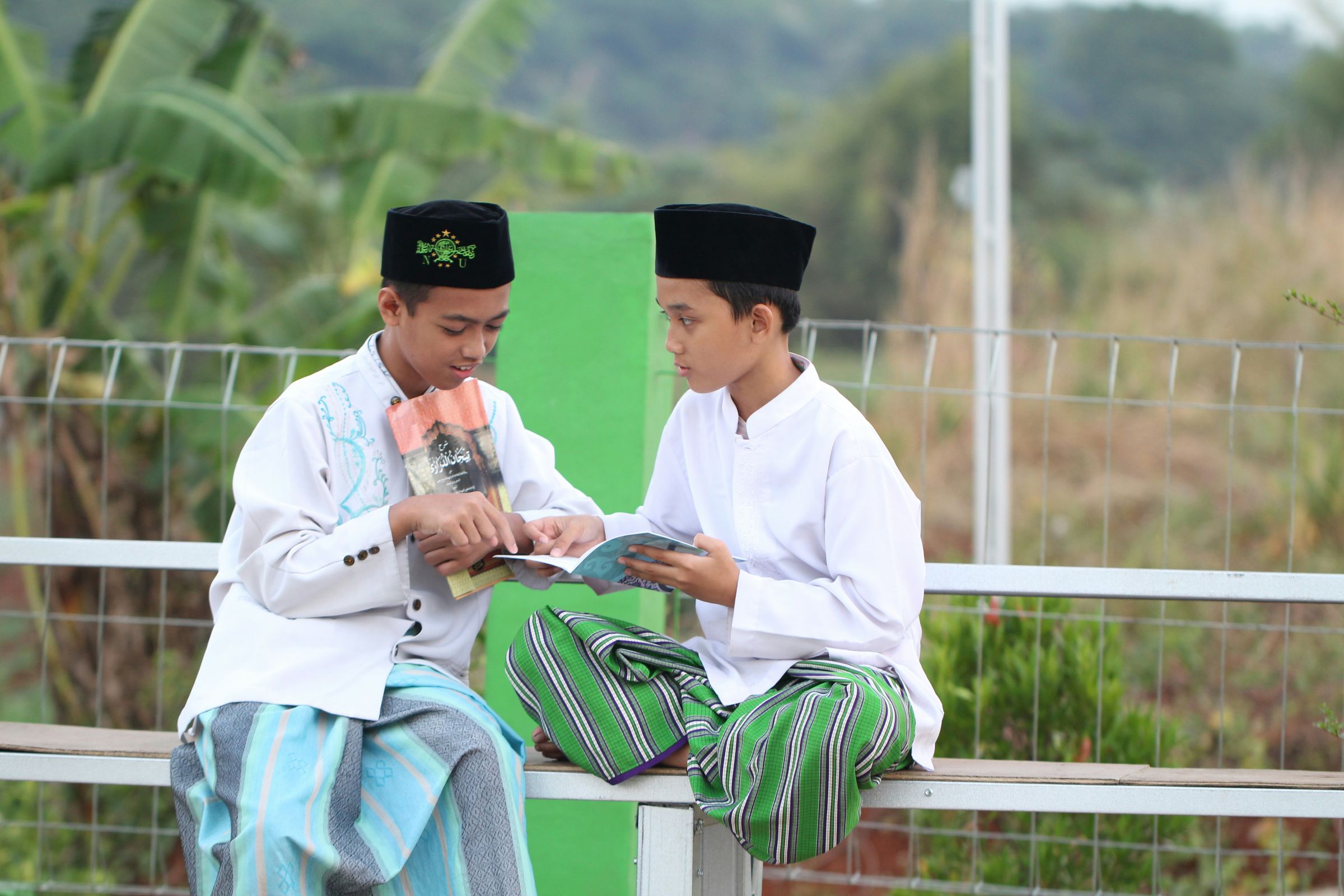
On my last day at the school, a young intelligent girl student came up to me and we started talking in English; she had a very good English, I must say. Somewhere in the conversation she mentioned that she reads a lot about iconic African leaders, Kwame Nkrumah among them. I was surprised. I had come to teach Arabic in a pesantren (Islamic boarding school) in West Java, and I had not expected a student there to know much about Ghana’s first president. I asked her why she read about him. She shrugged and said she simply reads a lot.
I have thought about that exchange many times since. She was not answering an exam question or showing off for a visitor. She was just curious, and the school around her seemed to leave room for that.
The school is Pondok Modern Al-Aqsha, in Jatinangor, in Sumedang Regency, on the road between Bandung and Sumedang. It is a pesantren, an Islamic boarding school, a kind of institution Indonesia has in huge numbers. The Ministry of Religious Affairs counts well over 40,000 of them, “serving more than 6.26 million students and supported by over 1.16 million teachers (ustadz)”.
I went through personal connections, not as a researcher, and stayed for one week. That is a small window, and I want to be careful about what it can tell us. But I came from Nigeria, where I have studied in Islamic schools myself, and I could not stop comparing.
Six teachers and a headmaster’s story
We were six foreign teachers: three Nigerians, one Ghanaian, one Sudanese and one Pakistani. The Ghanaian teacher, the Sudanese teacher and I taught Arabic, and the others taught English. We all stayed in an apartment at the school. The students were excited to have us. A week of visitors does not make a school international, but it does tell students that the world is not far away and that people from many places teach and learn together.
On the first day we met the headmaster and two colleagues who help run the school. What struck me was that all three had studied at the same pesantren earlier in their lives! The headmaster later founded the pesantren we visited, and he now employs many people. He hired his two former colleagues to help him run it, and one of them now leads one of its branches, a teacher-training college for men and women called Kulliyat al-Muʿallimīn wa al-Muʿallimāt. I do not know the name of the pesantren they attended, and I do not want to guess. But the story points to something that is easy to miss: schools last when their graduates go on to build institutions of their own. They had trained elsewhere, and they were now serving the school their former colleague had founded. Their enthusiasm for it was striking. They happily told me about it. That tells a lot about why the pesantren institution in Indonesia resisted many difficult times and persevered for centuries.
Manners, and a school run by its students
The language classes ran from the morning until Zuhr. After ʿAsr and ʿIshāʾ there were extra language sessions, with students who liked Arabic in one room and students who liked English in another. I was allowed into almost every class. The students came to the Arabic sessions because they wanted to, and that made them a pleasure to teach.
What stayed with me most was how the students carried themselves. When they saw us, the foreign teachers, many hurried over to shake our hands, and many kissed them as a sign of respect. Wherever we walked, someone waved and smiled. I am not claiming this means the students were perfect. I am describing what I saw, and I found it warm.
I also noticed how much was left in their hands. Every day, selected students sat outside and ran the school’s reception. When visitors arrived, students received them. Students guided guests, helped with hospitality and organized assemblies. They handled the microphones and sound system and served as MCs. I saw students doing real jobs, not just sitting and being instructed. I cannot say what theory, if any, lies behind this, and I won’t guess. But I could see what it produced: young people who looked comfortable speaking to strangers and responsible for something that mattered.
Islamic subjects beside the sciences
The curriculum was the other thing I wanted to understand. Students study Islamic subjects such as ʿaqīdah (creed), naḥw (grammar), balāghah (rhetoric) and manṭiq (logic). They also study general subjects, like students in conventional schools, and I saw those lessons myself. Graduates, I was told, go on to study fields as different as chemistry, engineering, medicine, physics, Islamic jurisprudence, Qur’anic studies and philosophy. Not every graduate follows all of these paths. The point is that the school prepares students for many.
A road to university
A school leader also told me that the school encourages students to apply to universities abroad. By their last year, students are expected to be strong in both Arabic and English. Those interested in Sharia can be helped toward institutions like Al-Azhar (as they told me they have tens of students there), and others toward other countries. One of their students was about to travel to Australia to study chemistry. I do not know his name or his university, and I am reporting what I was told. Indonesia also builds such pathways into public policy. Since 2005 the Ministry of Religious Affairs has run a scholarship program, the Program Beasiswa Santri Berprestasi, that sends high-achieving pesantren graduates to partner universities, with the stated aim of strengthening science and technology while keeping religious learning strong.
What Northern Nigeria already has
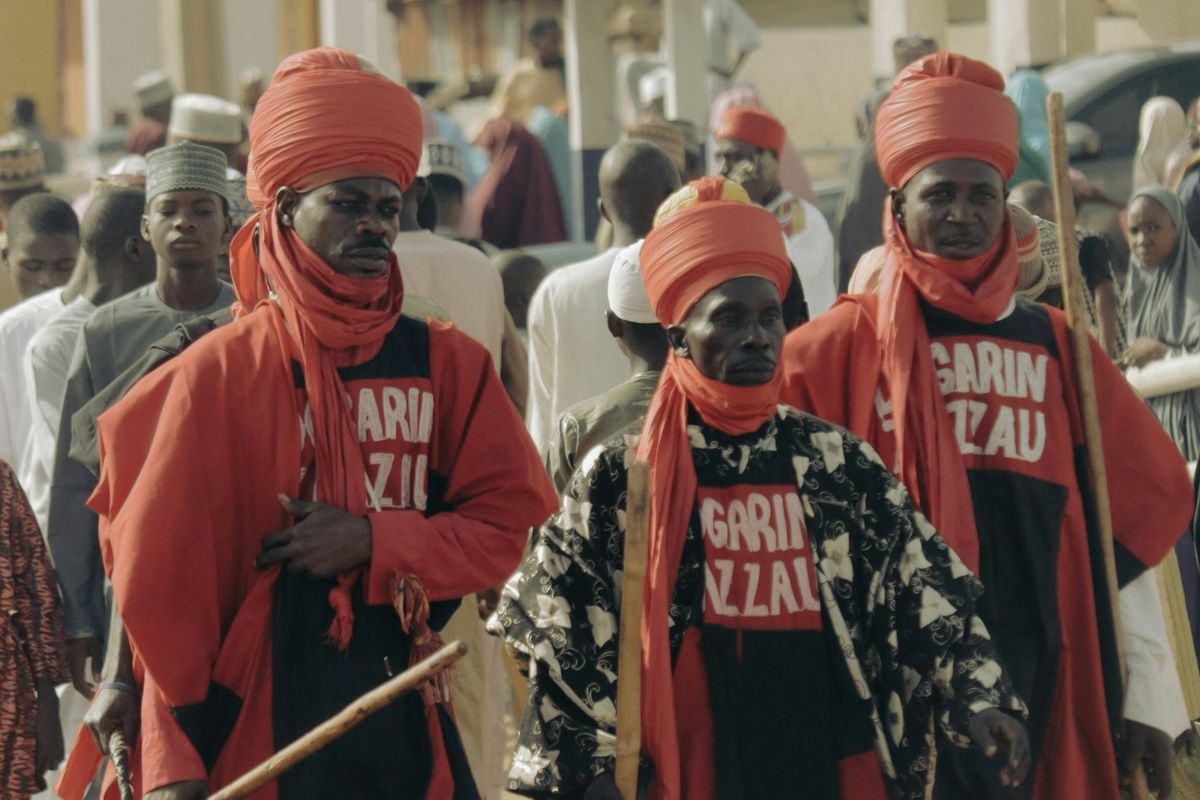
I should be fair to Nigeria, because the lesson here is not that Nigeria has done nothing. Northern Nigeria has a long history of trying to combine Islamic and modern education. Under British indirect rule, missionaries were kept out of the emirates, and the north fell behind the south in (secular) schooling. Out of that history came the first Islamiyya schools: colonial institutions in Kano such as the Shahuci Judicial School of 1928, and then schools founded by Northern Nigerians themselves in the 1940s and 1950s. An Islamiyya school teaches Islamic subjects alongside English, mathematics and science. Alex Thurston, in a 2012 essay for The Revealer titled “Nigeria’s Islamiyya Schools: Global Project, Local Target,” describes huge variety among Kano’s Islamiyya schools. One had a science laboratory and graduates who had gone on to universities in Nigeria and abroad, and these schools have been an important route to education for both boys and girls.
There are newer efforts too. In January 2026 Nigeria’s Universal Basic Education Commission (UBEC) opened one of a planned thirty bilingual boarding schools built with the Islamic Development Bank. Four are in Kano State, and each is designed to join Arabic and English literacy, technical training and safe boarding. UNICEF has helped set up integrated Qur’anic schools, where both Western and Qur’anic studies are taught together. The National Board for Arabic and Islamic Studies (NBAIS) certifies the Arabic and Islamic school sector, and about 1,200 schools are affiliated with it.
The gap is scale and trust
So Nigeria has the ideas. What is harder is scale and trust. UNICEF’s Nigeria representative has said roughly ten million children are in the Qur’anic school system, and estimates of Nigeria’s out-of-school children run from about ten to over eighteen million, with the north hit hardest. Many of these schools are poor, and their pupils are classed as out of school. The certificate board itself says that many universities still refuse to accept its certificate for admission. A school can teach everything well, and its students can still hit a wall at the university gate.
This is where I think the pesantren has something to teach, and it is more about institutions than syllabi. One caveat belongs here: a school that invites foreign teachers is not a random sample of the sector, and a week is long enough to see what a school chooses to show a visitor, not where it struggles. Al-Aqsha showed me what happens when the pieces fit together: serious Islamic study, general subjects, strong Arabic and English, guidance toward universities, and students who run parts of school life. None of those pieces is foreign to Northern Nigeria, but they are rarely found in one place.
A word on discipline
I should say a word about discipline, carefully. In my own experience, beating is generally common in a lot of Nigerian schools, and some Islamic boarding schools use it. Although some states in Nigeria such as Lagos and Ogun from the Southern part and Katsina and Nasarawa from the Northern part of the country have banned corporal punishment, it still happens in some schools. But Indonesia is no model here. Corporal punishment happens in Indonesian schools too, and researchers have documented physical punishment in some pesantren, but I did not notice any such punishment at Al-Aqsha. The United Nations child rights committee also warns that punishments which humiliate children can be as harmful as physical ones. So the question I take home is not “shame or the cane?” but what discipline looks like when it protects a child’s dignity and still teaches responsibility. The practice in Al-Aqsha was worth emulating. The students have a good relationship with their teachers, and no sign of corporal punishment was noticed. They looked extremely happy and enthusiastic to be there.
What could travel, and what could not
Nigeria cannot simply copy Indonesia, and Indonesia should not be romanticized either. The pesantren sector is vast and uneven. In 2025 a pesantren building collapsed in East Java, killing at least sixty-seven people, and officials said very few pesantren buildings had permits. Nigeria also faces insecurity, thin budgets and a different relationship between state and religious schools. But the main idea travels. Three things seem worth adapting, though each needs a careful owner. The Federal Ministry of Education and the National Universities Commission (NUC) have already told universities to accept the NBAIS certificate, so the task now is enforcement and credibility, not a new decision. UBEC and state education boards should first make sure pupils in the new bilingual boarding schools can move on to senior secondary school, and federal and state governments could then pilot a university pathway like Indonesia’s. And school heads can start now by giving students service roles, under adult supervision, not power over their peers.
The girl who reads
I keep returning to the girl who reads about Nkrumah. Nobody at that school told her to. Islamic education does not need to choose between faith and knowledge of the wider world, and a school that keeps both open may produce the kind of curiosity that makes both stronger.

Comments
No comments yet.