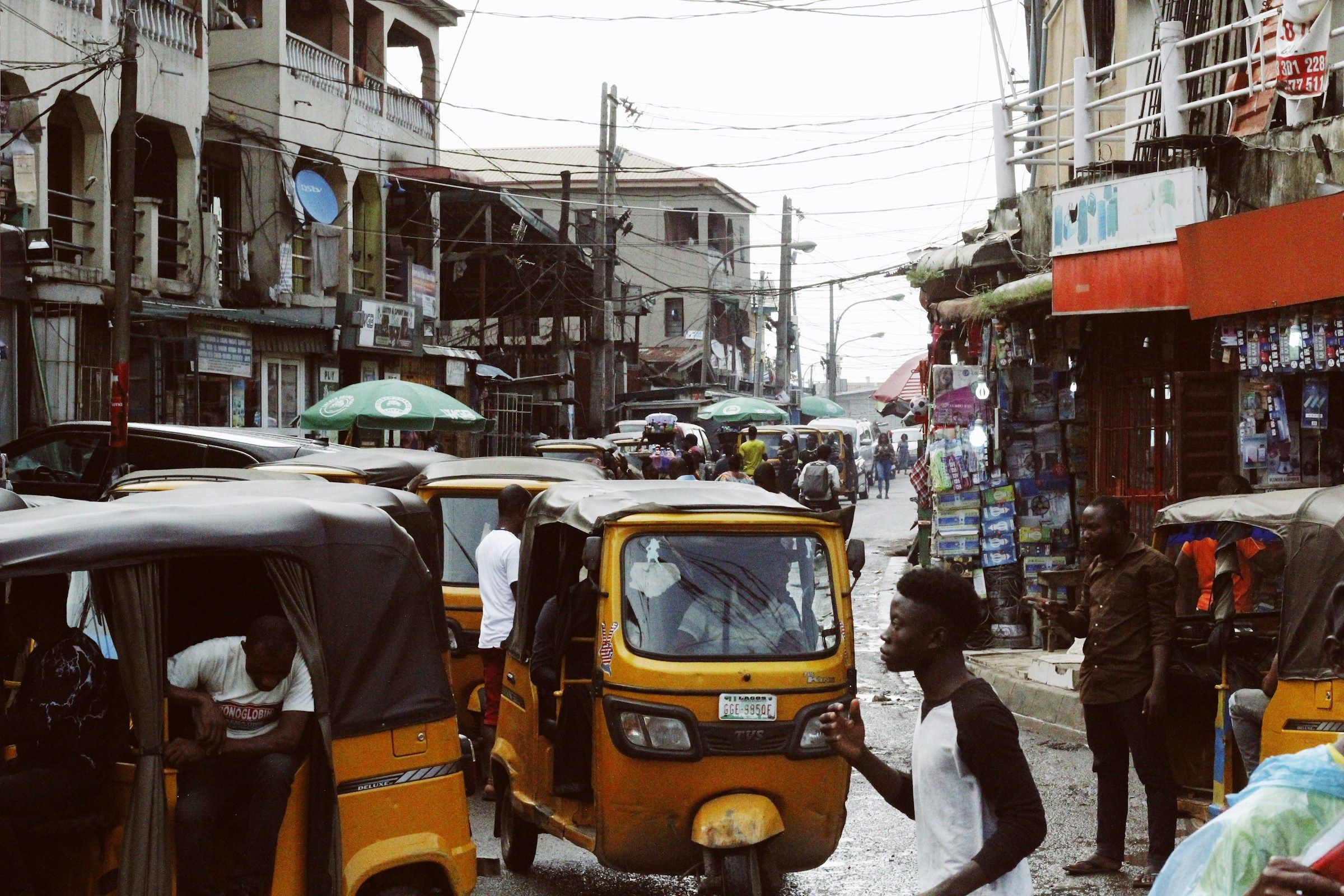
In Nigeria, where the government celebrates GDP growth while millions of citizens face rising hunger, poverty and declining purchasing power, it brings to light what the government proves to be the priority. Is a written presentation on paper more important than the reality and lives of Nigerians?
GDP figures grow, and international organizations and the government celebrate it as proof of progress. This happens because GDP is primarily used as a metric by which Nigeria’s development is being evaluated and financed. GDP was never a tool designed to measure the wellbeing of individuals. Rather, it was simply an accounting tool developed in 1934 by Simon Kuznets to measure the economic activity of a country, where he warned against its use as a measure of human welfare. Unfortunately, GDP has become the dominant language of development policy, with the cost of this choice borne by the Nigerian state.
The impact is serious for policymakers because most of the time, the government is evaluated based on economic growth indicators, specifically GDP growth, and GDP alone does not show improvements in the living standards of citizens. For instance, economic growth has not led to proportional reduction in poverty, a phenomenon described as low “growth elasticity of poverty” by Nanak Kakwani in the 1990s. Low elasticity is not the result of poor policy implementation but a consequence of poor measurement guiding policy in the wrong direction. This explains that GDP actively misleads policymakers and harms development outcomes.
Nigeria’s development narrative should not increasingly be defined only by the size of its GDP, but by the wellbeing of its people: areas spanning education, life expectancy, gross national income, access to basic amenities, institutional stability and the translation of growth in the individual lives of citizens.
Since GDP has become an inadequate compass in measuring development and welfare, alternative measurement models have been developed to fill the gap GDP leaves. Some of these models include the Human Development Index (HDI) adopted by the United Nations Development Programme (which measures development from the dimensions of health, education and standard of living, aggregating them into a composite index making use of the geometric mean ranging from 0 to 1), the Mo Ibrahim Index of African Governance (IIAG, which assesses governance performance), the Multidimensional Poverty Index (MPI, which measures global poverty beyond monetary deprivations), and the Genuine Progress Indicator (which takes account of a nation’s economy by incorporating social, economic and environmental factors).
Analysis: Nigeria’s current state
| Indicator | Nigeria |
|---|---|
| GDP (nominal, 2025) | $290.49 billion |
| GDP global rank | 51st |
| GDP growth rate (2025) | 4.01% |
| HDI score (2023) | 0.560 |
| HDI global rank | 164th |
| IIAG governance trajectory | Slowing deterioration (ranks 42nd) |
| MPI value | 0.269 |
| MPI incidence (% poor) | 48.7% |
| Population below poverty line | 56.2% |
| Corruption Perceptions Index | 26/100 (142nd) |
Sources: International Monetary Fund 2025, UNDP Human Development Report 2025, 2026 Ibrahim Index of African Governance Index Report, OPHI Global MPI 2026, Transparency International 2025.
Nigeria is one of Africa’s largest economies by nominal GDP at $290.49 billion, and ranks 51st globally. It has an HDI score of 0.560, which places it 164th out of 193 countries. The HDI score and position categorize it as a country slightly above low development and drastically below high development. The report of the multidimensional poverty data clearly estimates that 48.7 percent of Nigeria’s population (about 113.3 million people in 2024) is multidimensionally poor and 18.1 percent (approximately 42.2 million people) is classified as vulnerable to multidimensional poverty. Furthermore, the intensity of deprivations among those living in multidimensional poverty is at 55.1 percent, buttressing the fact that the average poor Nigerian is deprived simultaneously. This type of poverty is not marginal but deep, one that GDP, by creation and design, is unable to capture.
A 22 percent increase in Nigeria’s HDI has been shown in the past nineteen years. Still, it remains almost stagnant between 0.548 and 0.560, with inequality estimated at 32.7 percent, causing the most loss in Nigeria’s HDI score, according to the United Nations Development Programme. This shows that human development progress in Nigeria is disproportionately shared, with people at the top gaining more in income distribution, while the population whose transactions drive GDP upward remains in multidimensional poverty and deprivation.
On the level of overall governance, Nigeria, which is Africa’s most populous country, has a performance driven by poor security and safety. Nigeria ranks 42nd out of 54 countries in the IIAG report of 2026 with a score of 44.2. Nigeria is one of the thirteen countries in Africa whose governance performance is among those experiencing slowing or increasing deterioration; it was worse in 2025 than in 2016. This places Nigeria in the bottom ten most declined countries and lowest scoring countries in 2025. This deterioration affects its economy and weakens institutional conditions that translate GDP into human development.
The ecological dimension, which Nigeria’s Environmental Performance Index score covers, states that it ranks 37.9 out of 100 and places it 140th globally. This result spans climate change, agriculture, air pollution and waste management, deforestation and the overall ecosystem. These losses are missing from both GDP and GDP growth.
The case of Nigeria reveals that GDP can grow to become one of the largest economies in Africa, yet the majority of citizens live in multidimensional poverty, poor governance and eroded ecological foundations. The development realities of Nigeria do not tally with its GDP. That is, GDP rank overstates the development state. This misalignment is caused by structural features present in Nigeria’s economy, which are the informal economy, ecological depletion, and distributional inequality. It should be noted that GDP growth does not automatically and directly lead to human development improvement. In Nigeria, GDP growth exists alongside governance deterioration and intense multidimensional poverty. Government officials and policymakers should therefore not be swayed by GDP growth alone.
Also, of all four alternative metrics, the IIAG and MPI give the most reliable and diagnostic value for Nigerian policymakers. The HDI measures welfare across three dimensions that the GDP ignores, yet it is still considered a blunt tool. The MPI, which measures simultaneous deprivation using 10 valid indicators, and the IIAG’s assessment of governance quality, using 319 variables, provide a more robust and policy-relevant understanding of development reality. Nigeria’s MPI intensity score of 55.1 percent and its deteriorating IIAG trajectory present a development challenge that is more detailed and urgent.
Conclusively, GDP functions as a misleading and unreliable measurement indicator for the Nigerian state, and its continued dominance in Nigeria’s policy framework leads to avoidable harm. A composite wellbeing framework that combines IIAG, MPI, HDI, and ecological indicators will provide the Nigerian government and international institutions with a more reliable, accurate, and policy-relevant view of development. Rather than “how much we produce,” there should be a shift in measurement to “how well people live.”

Comments
No comments yet.